What a Day at Our Singing Bowl Family Healing Workshop Actually Looks Like
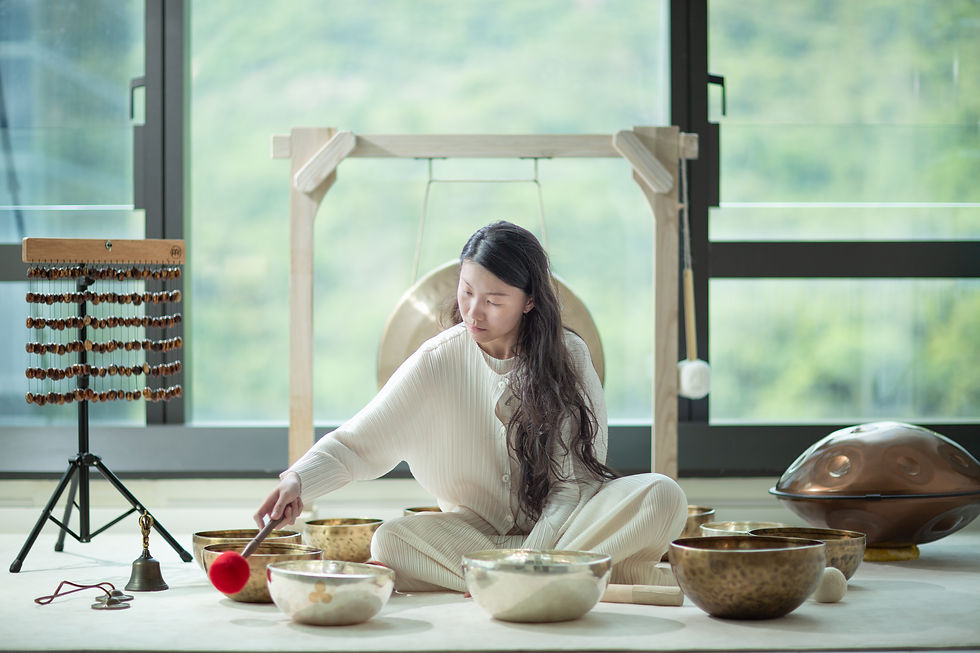
If you've ever wondered what actually happens during a singing bowl workshop — not the marketing version, the real hour-by-hour version — you're in the right place. A lot of people sign up curious but a little unsure what to expect, so here's a walk through our Singing Bowl Family Healing Workshop, exactly as it runs.
The day is split into two parts: a morning built around understanding your bowl, and an afternoon built around using it. You don't need any background in sound healing, meditation, or music. You just need to show up.
Morning, 9:30am–11:30am: Getting to Know Your Bowl
The morning starts gently, with a short chanting meditation using the bowls — partly to ease into the day, partly so you can hear what a bowl actually sounds like before we explain anything about it.
From there, we work through the basics, one piece at a time:
We talk about where singing bowls come from and the traditions they carry. Where they began. Singing bowls have a long history across the Himalayan region, and knowing that history gives the rest of the day more context.
We look at what they're made of and how they're made — the difference between hand-hammered and machine-made bowls, and why that affects the sound and feel of each one.
We cover how to tell different bowls apart — by size, material, and tone — so you start to develop an ear for what you're listening to.
We also introduce a few supporting tools people often use alongside bowls, like mallets, strikers, and resonance aids, and what each one is actually for.
By late morning, you'll have handled and listened to a range of bowls, and you'll start practicing the basic playing techniques yourself — striking, rim playing, the foundational moves everything else builds on.
It's a lot of information, but it's paced slowly. Nobody's expected to retain everything on the first pass — the afternoon is where it starts to click through practice.
Afternoon, 2pm–6pm: Bringing It Into Practice
After lunch, the focus shifts from learning about bowls to actually using them.
We start with a short guided session so you can feel, firsthand, what a few minutes with a singing bowl is like when you slow down and just listen. For a lot of people, this is the part of the day that makes everything from the morning make sense.
From there, we move into a set of simple techniques you can use at home — the kind of thing you might reach for at the end of a long day, before bed, or when you just want a few quiet minutes to yourself. We cover:
Gentle techniques for winding down before sleep, useful if you or someone in your house tends to lie awake with a busy mind.
Simple ways to ease into a calmer state when things feel overwhelming or tense.
A short, repeatable practice for settling into rest, especially on days that have felt stressful.
A beginner-friendly focus exercise, useful for meditation or just for resetting your attention midway through a busy day.
The last part of the afternoon moves into everyday physical comfort — gentle techniques people use around general tension, stiffness, or low energy, the kind of ordinary discomfort that builds up from daily life rather than anything specific. You'll also get a short practice for settling your body and mind when you're feeling depleted or worn down, something many people find useful at the end of a long week, plus a simple, gentle technique for soothing a fussy or unsettled child.
We close the day talking about how to bring all of this home — how to build a habit out of it, even just five or ten minutes a few times a week, so the practice doesn't end when the workshop does.
What You Walk Away With
By the end of the day, you'll have handled real bowls, learned the basic techniques, and practiced a handful of simple routines you can use on your own. You don't need to remember everything perfectly — you'll leave with a simple guide to take home, so you can keep practicing at your own pace.
If this sounds like something you'd enjoy a quiet, hands-on day learning, we'd love to have you.